Now ask a Korean golfer. The answer involves a 5 a.m. alarm, a caddie managing four players at once, a mandatory mid-round meal, a post-round sauna, and a second bag packed specifically for everything that happens before and after the golf. The game is the same. Almost nothing around it is.
South Korea is the third-largest golf market on earth, behind only the United States and Japan, and roughly one in ten Koreans plays. But the way they play — the rituals, the pace, the dress, the technology — has evolved into something distinct enough that it's worth explaining on its own terms. Especially because pieces of it keep showing up in American golf.
The tee time is a competition before the round is
Korea has a lot of golfers and, relative to demand, not many courses. New course construction has largely stalled, and the courses that exist run full from first light until well after dark — many are floodlit for night play, a concept that still feels exotic in most of the U.S.
The practical result: tee times are scarce, booked weeks out, and early. Painfully early. A 5:30 a.m. departure for a 7 a.m. tee time is a normal weekend, not a special occasion. Golfers plan rounds the way Americans plan concert tickets — the moment bookings open. Scarcity is also why the rest of the day is treated as an event rather than an errand. When a round takes this much effort to secure, you don't rush in and out of it.

A caddie runs the group — all four of you
On most full-size Korean courses, a caddie isn't a luxury add-on. One caddie manages the entire foursome: driving the cart, reading greens, pulling clubs, tracking every ball, keeping pace, and quietly running the round's logistics. Players walk to their balls; the caddie orchestrates.
For American golfers used to solo carts and rangefinders, the effect is startling — the round has a conductor. It changes the rhythm of play and, frankly, the dress code too. A round with a professional running it, at a club with a formal clubhouse, doesn't feel like a place for gym clothes. Which brings us to the halfway point.
The turn isn't a hot dog window — it's a sit-down break
Between the front and back nine, Korean courses build in a real stop at a rest house — called a geuneuljip, literally "shade house." Not a grab-and-go window: a seated break where groups order noodles, snacks, and drinks before the back nine. On busy days, the pause is scheduled into the flow of the course; you eat because the course is designed for you to eat.
It sounds inefficient to an American ear and completely civilized once you've done it. The round becomes a full-day social event with an intermission, which is exactly how Korean golf culture treats it.

The clubhouse is the second half of the experience
Here's the part that explains a whole category of Korean golf gear. Korean clubhouses typically include full locker rooms with baths and saunas, and the expectation is that you use them. Players arrive in street clothes, change into golf wear, play, then shower and change back before the meal or the drive home.
That routine requires carrying a full change of clothes, shoes, and toiletries — which is why Korean golfers carry a second, structured bag alongside the club bag. It's called a boston bag, and in Korea it's standard equipment, not an accessory. If you've ever browsed Korean golf brands and wondered why every one of them makes a boston bag, this is the answer: the bag exists because the clubhouse ritual exists.

More rounds happen on screens than on grass
This is the statistic that surprises American golfers most. South Korea is the only country in the world where more golf rounds are played on simulators than on actual courses. Golfzon, the biggest screen golf operator, runs more than 5,000 locations — outnumbering the country's Starbucks stores roughly five to one — and logged on the order of 94 million simulator rounds in 2023, nearly double the rounds played outdoors.
Screen golf isn't treated as practice. It's a night out, closer in spirit to karaoke than to a driving range: a private room, friends, food and drinks, eighteen holes in about an hour, for the price of a casual dinner. Surveys suggest close to two-thirds of Korean golfers play both formats. And for many younger players, the screen is where golf starts — the field comes later. If America's simulator boom feels new, it's worth knowing Korea has been running the full-scale version of it for two decades.

Why everyone is dressed like that
Put the pieces together — a scarce, expensive, all-day event; a caddie-run round at a formal club; a mid-round restaurant stop; a clubhouse where you'll change twice; a photo-friendly culture where the round ends up on social media — and the famous Korean golf dress sense stops looking like vanity and starts looking like logic. You dress for a full-day occasion because that's what the day is.
It's also why Korea is widely cited as the world's largest golf apparel market, and why Korean golf wear is built the way it is: coordinated sets, refined details, sun protection engineered into everyday pieces, clothes designed to look right from the first tee through the post-round meal. We covered what makes the clothing itself different separately — the short version is that when golf is an occasion, the wardrobe follows.
What American golfers are already borrowing
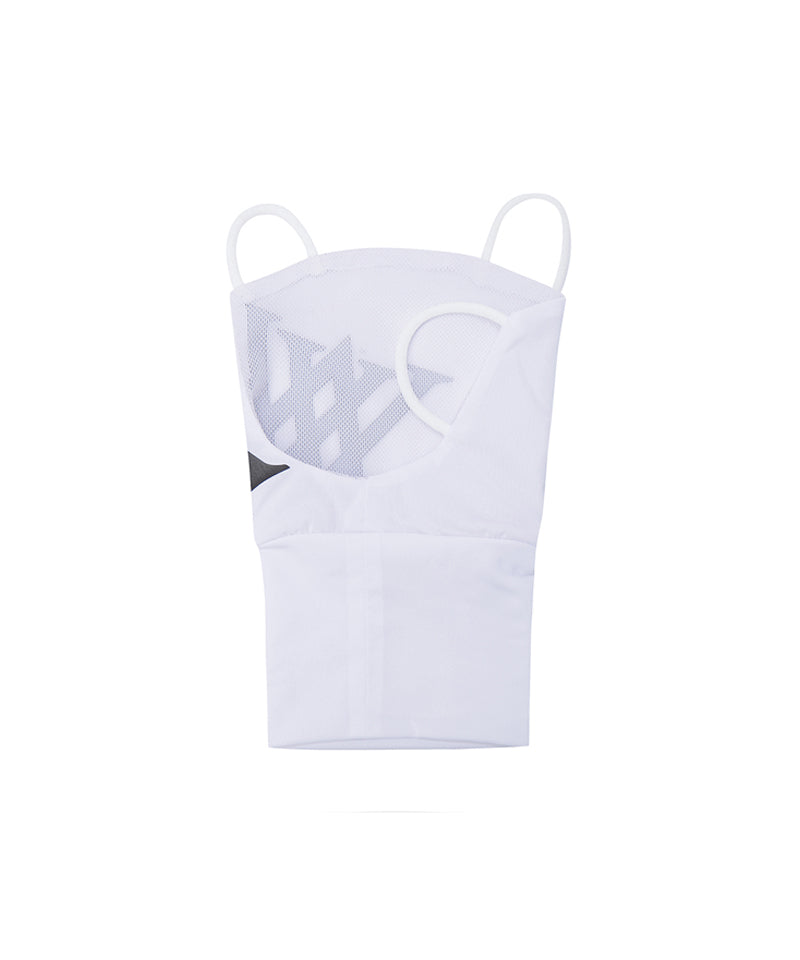
Some of this is staying in Korea — the 5 a.m. tee-time wars can keep. But pieces of the Korean golf day are quietly crossing the Pacific. Indoor golf lounges with food and private bays are opening across American cities. Golf outfits are getting more considered, more coordinated, more photographed. Sun protection is being taken seriously as gear rather than an afterthought — something Korean golfers settled years ago, right down to the visor. And the idea that a round might deserve a change of clothes and a proper meal afterward doesn't sound as foreign as it did a decade ago.
Golf in Korea isn't a different sport. It's the same sport treated as a bigger occasion — with the gear, the rituals, and the wardrobe that a bigger occasion deserves. Once you've seen a round done that way, the American version starts to feel like it's missing a few holes.